The waste industry is entering a period of significant regulatory change. Over the next 12 months, businesses involved in collecting, transporting, buying, selling, or managing waste will need to prepare for two major reforms: Digital Waste Tracking (DWT) and the new Controllers and Transporters (CaT) regime. Together, these initiatives represent a substantial overhaul of waste movement recording and operator regulation, with the aim of reducing waste crime, improving transparency and creating a more modern, data-driven waste management system.
These changes aim to modernise waste regulation, improve compliance, provide regulators with better quality data, and help tackle waste crime across the UK. Information taken from
What is Digital Waste Tracking?
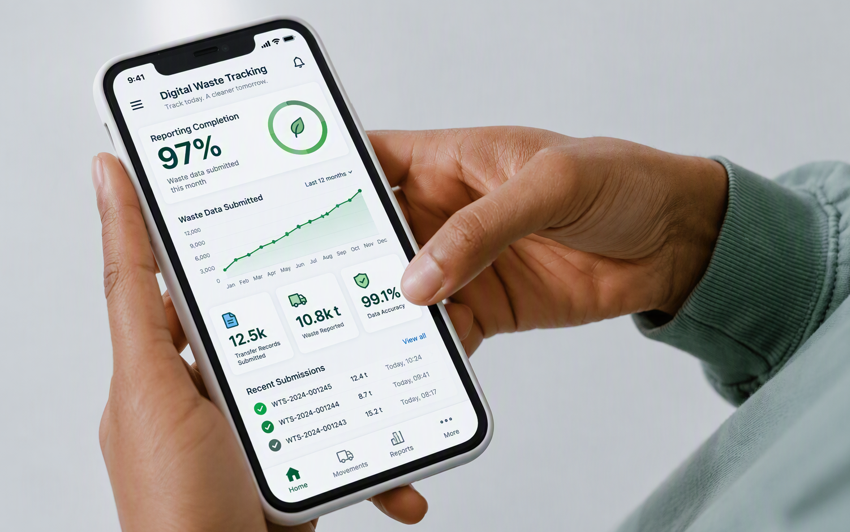
Digital Waste Tracking (DWT) is a new system designed to improve how waste information is captured, shared and monitored throughout the waste supply chain. The objective is to provide regulators with faster access to more accurate data, creating a clearer picture of waste movements and treatment routes.
The system was trialled in Belgium to test whether digital watermarks can improve the sorting of flexible food packaging and help increase the availability of recycled material for food-grade applications.
It will introduce additional requirements alongside existing Duty of Care obligations, and digital reporting will sit alongside existing Duty of Care requirements. A trail
Two Ways to Submit Data
When Digital Waste Tracking is introduced, operators will be able to submit information using one of two methods:
1. Spreadsheet Submission
The spreadsheet route is expected to be the more manual option. The process involves:
- Receiving waste and collecting the associated documentation in the normal way.
- Recording the information for quarterly reporting.
- Entering the required data into the approved spreadsheet template.
- Uploading the spreadsheet to the Digital Waste Tracking service on GOV.UK.
- Validation checks being carried out on the submitted data.
- Data being forwarded to the Digital Waste Tracking platform.
- Regulators receiving the information.
- While suitable for some operators, this approach will require additional administrative effort and may take longer to manage.
2. API Integration
The second option is direct integration through an Application Programming Interface (API). Under this model:
- Waste information is entered directly into the operator's software system.
- Quarterly reporting information is prepared automatically.
- Data is transmitted directly from the software to the Digital Waste Tracking platform.
- Regulators can access the information without additional manual intervention.
For organisations already using waste management software, API integration is likely to provide the most efficient route to compliance.
A Phased Rollout
Digital Waste Tracking will be introduced in stages.
The initial phase will focus on online and spreadsheet-based submissions, allowing organisations to begin reporting digitally. Household Waste Recycling Centre (HWRC) data will also be included within the system. A service charge will apply to users of the platform.
A second phase will expand the scope considerably and is expected to include:
- Green List waste movements under Article 18 import and export requirements.
- Registered exemptions.
- Waste production reporting.
- Collection activities.
- End-of-waste information.
- Removal of some existing reporting obligations.
- Introduction of regulatory charges connected to the service.
Reforming the CBD System
Alongside Digital Waste Tracking, DEFRA laid legislation in May 2026 to reform the long-standing Waste Carrier, Broker and Dealer (CBD) registration framework.
The reforms are intended to:
- Create a fairer environment for compliant operators.
- Tackle waste crime, which is estimated to cost the UK economy around £1 billion annually.
- Improve compliance with waste Duty of Care requirements.
- Strengthen regulatory and enforcement powers.
The current CBD system has long been criticised for being outdated, with every operator paying the same fee regardless of activity level or risk profile, while regulators have limited powers to intervene where issues arise.
Introducing Controllers and Transporters (CaT)
The new Controllers and Transporters (CaT) framework will replace the existing CBD registration system and move regulation into the Environmental Permitting framework.
Under the new model, operators will fall into one of three categories:
Controller
A Controller is an organisation that:
- Organises waste collection and transportation.
- Provides waste descriptions.
- Arranges destinations for waste.
- Organises recovery or disposal on behalf of others.
- Buys or sells waste.
Transporter
A Transporter is responsible for physically moving waste and:
- Acts under the instruction of a Controller.
- Moves waste between locations.
- Does not determine the classification or destination of waste.
Controller-Transporter
Some organisations will undertake both roles and will be regulated accordingly.
Better Data, Better Enforcement
A key driver behind both Digital Waste Tracking and CaT is the desire to create a more complete and up-to-date view of waste movements.
DEFRA expects faster access to waste data to improve understanding of material flows, helping both DEFRA and the Environment Agency allocate resources more effectively and target regulatory activity where it is needed most.
To support this, DEFRA is also developing a "waste observatory" that will bring together tracking and permit data to strengthen compliance monitoring and improve enforcement activity.
New Permits and Compliance Requirements
The reforms will introduce new permitting requirements for some operators.
One notable addition is a dedicated tradesperson permit for construction and demolition waste activities. Unlike other operator categories, this permit will not require a technical competence assessment.
Most other operators are expected to require evidence of technical competence as part of the new regime. Compliance activity will include audits and roadside inspections, with enforcement linked directly to Digital Waste Tracking records.
What Happens Next?
DEFRA is encouraging waste operators to engage with the new system as early as possible and become familiar with Digital Waste Tracking before it becomes mandatory. Early adoption should help businesses understand data requirements and avoid compliance challenges as the new framework develops.
Two consultations covering permits and charging structures are expected during early 2027, with the legislation due to come into force on 22 July 2027. Guidance for the devolved nations is expected to follow.